Binary Basics
How binary numbers, bits and bytes work, with worked examples.
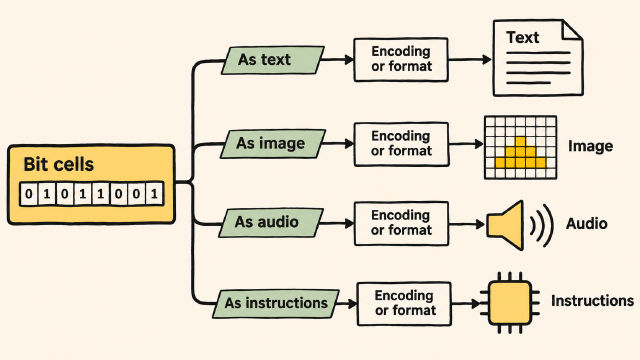 What Is Binary Code Used For? Text, Images, Audio and ProgramsLearn what binary code is used for in text, images, audio and programs, with an ASCII example and an explanation of why decoding depends on format.
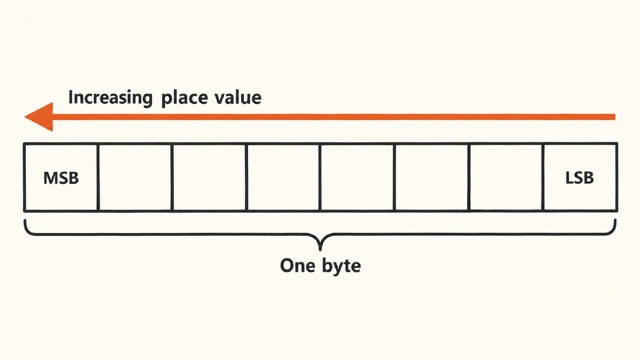 How to Find the LSB Bit in an ASCII ByteFind the LSB bit in an ASCII byte, see how changing it turns A into @, and distinguish bit significance from numbering and byte order.
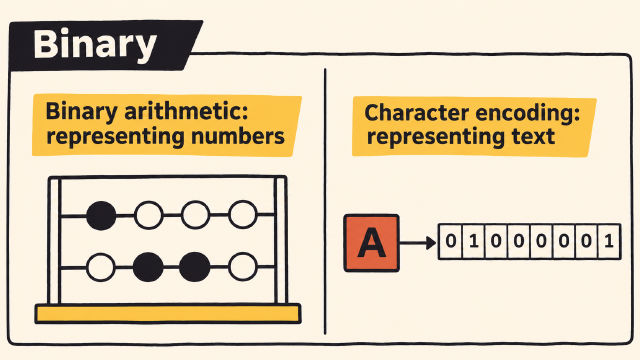 Who Invented Binary Code? Leibniz and the Road to ASCIILearn who invented binary code, what Leibniz contributed to binary arithmetic, and why ASCII text encoding has a separate history.
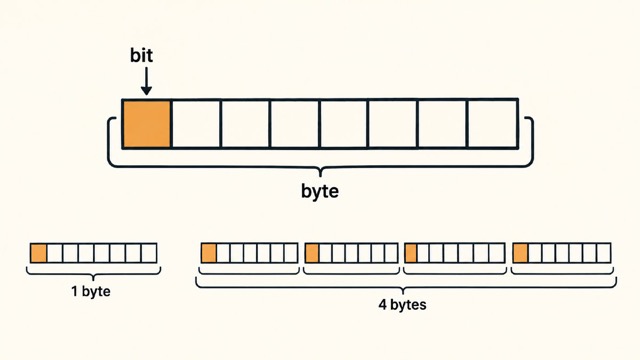 Bits and Bytes Explained Through ASCII and UTF-8 TextUnderstand bits and bytes with ASCII and UTF-8 examples: eight bits per byte, 256 patterns, and why letters and emoji use different byte counts.
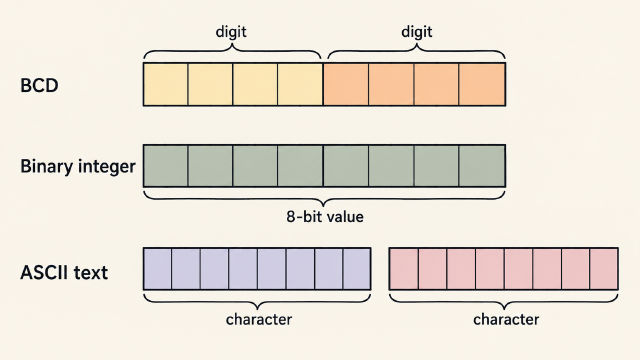 How BCD Code Stores Digits Differently from ASCII and BinaryLearn how BCD code stores each decimal digit, read four-bit groups, and distinguish packed and unpacked BCD from ASCII text and binary integers.
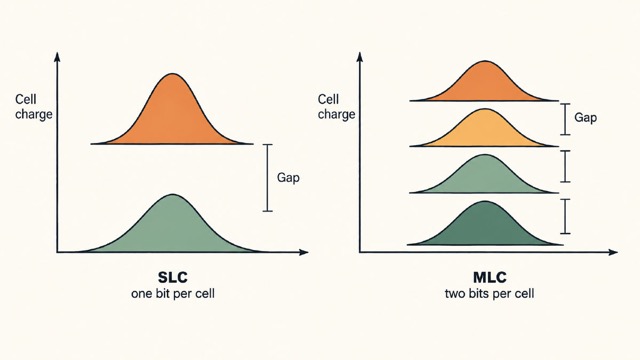 Why Do Computers Use the Binary System? Two States ExplainedWhy do computers use the binary system? Learn how two signal states simplify logic, tolerate noise and represent letters as bytes.
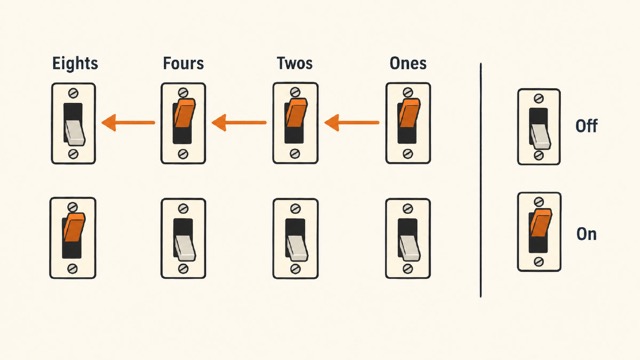 Counting in Binary System: How to Count Using 0 and 1Learn counting in binary system notation from 0 to 16, follow carries such as 11 → 100, and understand leading zeros and eight-bit limits.
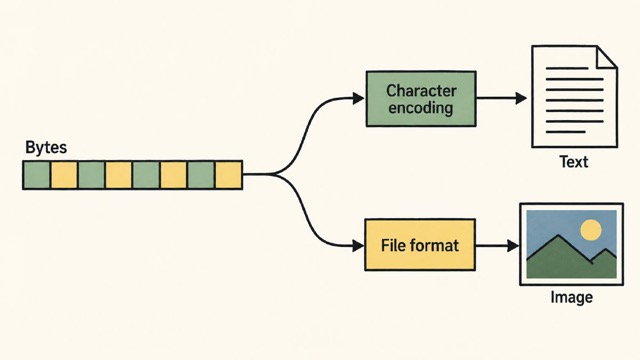 What Is a Binary File? How It Differs from a Text FileWhat is a binary file? Learn how it differs from a text file, compare actual bytes, and understand why translating them may not reveal readable text.
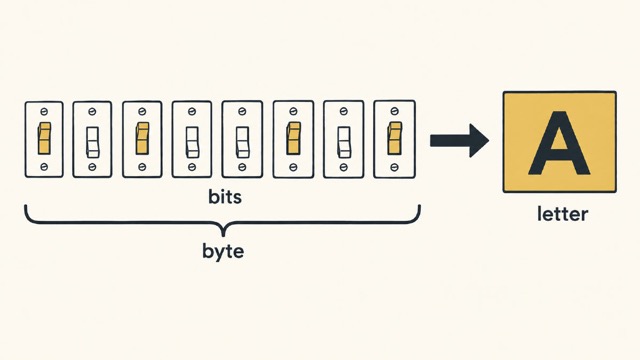 What Is the Binary System? How 0s and 1s Store Text in a ComputerThe binary system is base-2, using only 0 and 1. See how bits, bytes and place values work and how computers store letters as binary with ASCII and UTF-8.